
Description
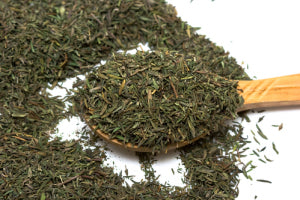
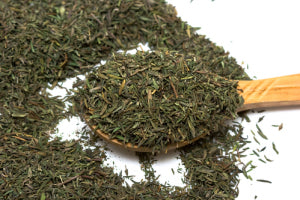
Rubbed thyme 100g
Tasty mountain herbs that restore vitality.The small thyme leaves exude an intense aroma reminiscent of Mediterranean holidays and culinary delights. And the longer thyme is cooked, the more intense its flavor becomes.
Origin:
Thyme has been widespread throughout the Mediterranean region since ancient times. It's a sun-loving herb, and the more sun it receives, the more intense its aroma becomes. Thyme gets its name from the Greek word "thymos," meaning life force or vitality. For centuries, it was believed that thyme bestowed strength. Tradition tells us that Roman legionaries bathed in thyme-infused water before battles to ensure their victorious return home. Thyme was then cultivated in monastery gardens, crossed the Alps, and conquered the world as a culinary herb. Today, thyme is widespread throughout Europe and also thrives in Africa, Russia, and the Americas.
Characteristics and cultivation:
Botanically speaking, thyme belongs to the mint family (Lamiaceae). Thyme is an exceptionally hardy plant. While it is cultivated in fields for industrial use, it can also be found in home gardens.
Aroma and use:
The small thyme leaves have a slightly bitter, spicy flavor. The essential oils thymol and carvacrol are very dominant. Thyme goes wonderfully with all vegetable dishes, but it also lends a Mediterranean flair to meat and salads. Thyme develops its aroma best when added to food early in the cooking process. Dried thyme often has a more intense flavor than fresh thyme. Thyme is also an indispensable seasoning in sausage making, as it imparts a distinctive flavor nuance, especially to sausage specialties.
Medicine:
Traditionally, cabbage dishes are seasoned with thyme. This is because thyme has carminative and diuretic properties. But thyme has other qualities as well. It has a calming and antispasmodic effect on respiratory ailments. In naturopathy, thyme is also used for colds, as it reduces fever. And thyme is also beneficial for sore throats and asthma.
Tip:
Thyme is a key ingredient in the well-known spice blend "Herbes de Provence." This blend may also contain rosemary, savory, oregano, and lavender. "Herbes de Provence" is a perfect complement to Mediterranean cuisine and is used to season meat and vegetable dishes. Sometimes, bay leaves, fennel, and grated orange zest are also included.
Payment & Security
Your payment information is processed securely. We do not store credit card details nor have access to your credit card information.